

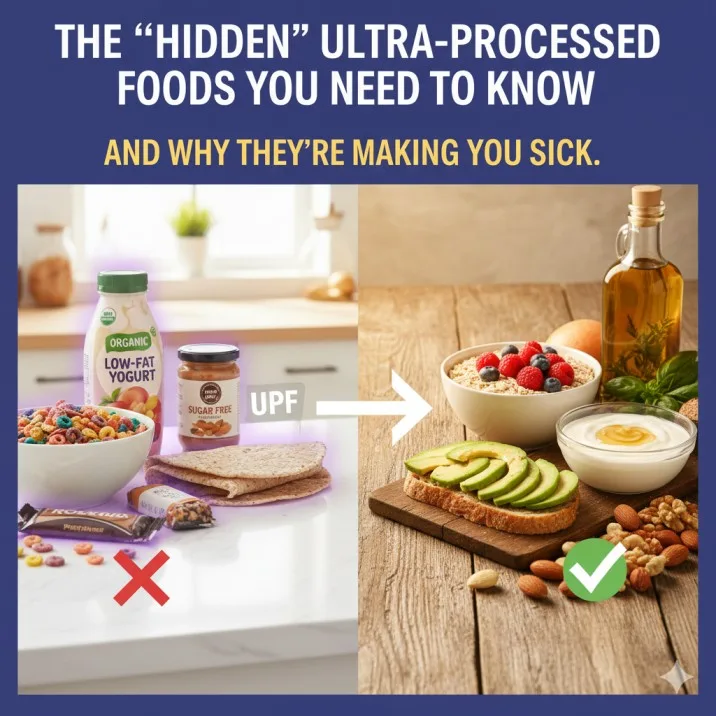
The conversation about calories has undergone a significant shift. If you wanted to lose weight or stay healthy, you just had to do the math. The latest study on ultra-processed foods reveals that it’s not just about how much you eat, but also how your food was made.
From the RFK Jr. ultra-processed foods campaign making headlines to new warnings from the World Health Organization, everyone is talking about ultra-processed foods (UPFs). But what exactly are they, and why is your gut microbiome, the trillions of tiny bacteria living in your stomach, reacting so badly to them?
Let’s break down the definition of ultra-processed foods and look at how they might be causing an ultra-processed foods inflammation risk in your body.
What are Ultra-Processed Foods? (The NOVA Scale)
These are foods that have been chemically altered with additives to make them hyper-tasty, shelf-stable, and “addictive.” They are often more “food-like substances” than actual food.
To understand this, we reference the NOVA food classification list. This system doesn’t look at vitamins or fat; it looks at the level of processing.
The 4 Groups of Food:
- Unprocessed or Minimally Processed: These are “real” foods. Think of an apple, a bag of raw spinach, or a piece of fresh chicken.
- Processed Culinary Ingredients: Things like olive oil, butter, sugar, and salt. You don’t usually eat these alone; you use them to cook Group 1 foods.
- Processed Foods: This is where it gets tricky. These are foods like freshly baked bread, canned beans in salt water, or simple cheeses. They usually have 2–3 ingredients.
- Ultra-Processed Foods: These are “industrial formulations.” If you see ingredients you wouldn’t find in a home kitchen, like high-fructose corn syrup, hydrogenated oils, emulsifiers, or flavor enhancers, it is a UPF.
Processed vs. Ultra-Processed Foods: What’s the Difference?
Many people ask, “Is all processed food bad?” The answer is no. Processing is just a way to preserve food (like freezing berries). The problem is ultra-processing.
| Food Item | Processed (Safe-ish) | Ultra-Processed (Limit These) |
| Fruit | Frozen strawberries (just berries) | Strawberry-flavoured fruit snacks |
| Grains | Plain oats or sourdough bread | Sugary breakfast cereals or “white” sliced bread |
| Meat | Fresh ground beef | Chicken nuggets or hot dogs |
| Dairy | Plain Greek yoghurt | “Fruit-on-the-bottom” yoghurt with thickeners |
The “Hidden” Ultra-Processed Foods in Your Kitchen
You might think you are safe because you don’t eat at fast-food restaurants. However, many ultra-processed foods are hiding in plain sight, often disguised as “healthy” options.
Is Cheese Ultra-Processed Food?
This is one of the most common questions. The answer is: It depends.
Real Cheese: Traditional cheeses like cheddar, mozzarella, or brie are “Processed” (Group 3). They contain milk, salt, and enzymes.
- Ultra-Processed Cheese: “American” singles, canned cheese spray, and some “dairy ribbons” are UPFs.They contain emulsifying salts, colors, and vegetable oils to make them melt perfectly.
“Healthy” Snacks That Are Actually UPFs
When looking for a list of ultra-processed foods to avoid, people are often shocked to find these items on it:
- Protein Bars: Most contain “soy protein isolate” and artificial sweeteners.
- Plant-Based Milks: Some brands use “gums” (like xanthan or guar gum) and seed oils to make them creamy.
- Gluten-Free Bread: To make up for the lack of gluten, these often use a long, ultra-processed food list of starches and thickeners.
How UPFs Cause an “Inflammation Risk” in Your Gut
Your gut microbiome is like a garden. To grow “good” bacteria, you need fiber and natural nutrients. Ultra-processed foods are like pouring salt on that garden.
1. They Starve the “Good” Bacteria
UPFs are “pre-digested” by machines. This means they are absorbed in your upper stomach, leaving nothing for the bacteria in your lower gut to eat. When your good bacteria starve, they start to eat the protective lining of your stomach instead.
2. Emulsifiers and “Leaky Gut”
Many items on the list of ultra-processed foods contain emulsifiers (like polysorbate 80). These act like soap, breaking down the mucus barrier in your gut. This allows “bad” bacteria and food particles to leak into your bloodstream, which is the primary cause of the ultra-processed foods inflammation risk.
3. The Sugar Spike
The high levels of sugar in UPFs feed “yeast” and harmful bacteria, which can lead to bloating, brain fog, and intense sugar cravings.
RECOMMENDED: 12 Best Foods to Boost Immunity Naturally & Strengthen Your Defence
Recent Ultra-Processed Food Update
Science is moving fast. In late 2024 and 2025, several major studies published in The British Medical Journal (BMJ) linked high UPF consumption to over 30 different health problems, including anxiety, heart disease, and Type 2 diabetes.
The news about this study on ultra-processed foods has sparked political movements. The RFK Jr. ultra-processed foods campaign in the United States has garnered national attention to the “chemicals in our crackers,” advocating for clearer labelling so parents know exactly what constitutes ultra-processed food before purchasing it for their children.
List of Ultra-Processed Foods to Avoid
If you want to heal your gut, try to reduce these items from your daily diet:
- Sodas and Energy Drinks: Pure liquid sugar and chemicals.
- Packaged Sweet Snacks: Cookies, snack cakes, and “muffins” that stay soft for weeks
- Mass-Produced Bread: Any bread that has more than 5 ingredients or contains “dough conditioners.”
- Instant Meals: Dehydrated noodles and “heat-and-eat” trays.
- Reconstituted Meat: Anything shaped into a nugget, patty, or slice (deli meats).
FAQs: Everything You Need to Know About UPFs
Q: What foods are ultra-processed exactly?
A: Any food that has been industrially formulated with ingredients you wouldn’t use at home, such as maltodextrin, high-fructose corn syrup, and artificial flavors.
Q: If I eat one UPF, will I get sick?
A: No. The problem is “displacement.” If 60% of your diet comes from a list of ultra-processed foods, you are displacing the fiber and nutrients your body needs to fight inflammation.
Q: How do I read a label for UPFs?
A: Look for the “Kitchen Test.” If the label lists things like carrageenan, soy lecithin, or “natural flavors,” it’s likely an ultra-processed food.
Q: Can I “fix” my gut after eating UPFs for years?
A: Yes! The gut microbiome is incredibly resilient.17 Research shows that switching to a “Whole Foods” diet (Group 1 and 2 on the NOVA scale) can significantly improve your gut bacteria in as little as three days.
References
- Monteiro, C. A., et al. (2019). “Ultra-processed foods, diet quality, and health using the NOVA classification system.” FAO.
- Lane, M. M., et al. (2024). “Ultra-processed food exposure and adverse health outcomes: umbrella review of epidemiological meta-analyses.” The BMJ.
- Nardocci, M., et al. (2021). “Consumption of ultra-processed foods and body weight gain: a systematic review.” Nutrition Reviews.
- Chassaing, B., et al. (2015). “Dietary emulsifiers impact the mouse gut microbiota promoting colitis and metabolic syndrome.” Nature. (Crucial study on how UPF additives cause inflammation).





Leave a Reply