

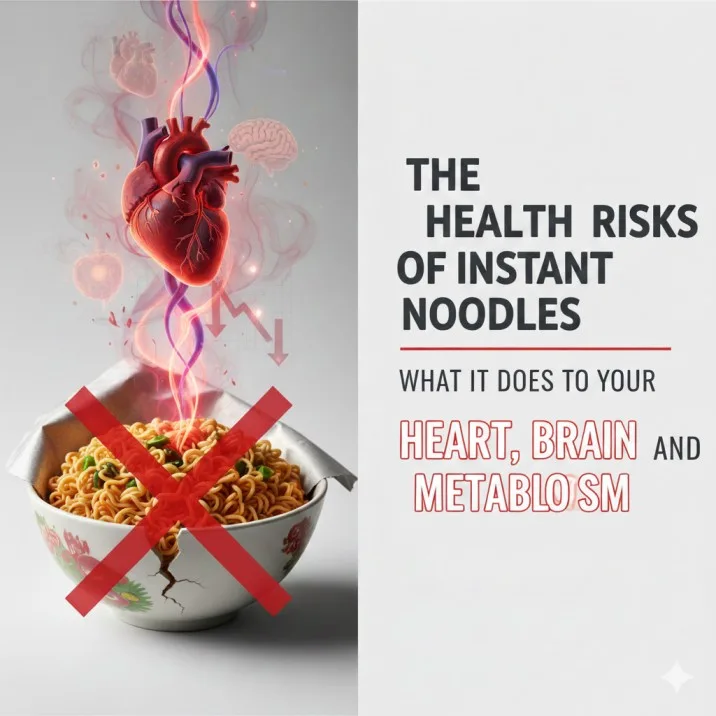
For most people, instant noodles are the ultimate “budget-friendly” comfort food. They are fast, savoury, and remarkably cheap. However, as we move into 2026, nutrition science has progressed beyond simply labelling them “junk food.” New research studies have linked frequent consumption of instant noodles to health issues known as Metabolic Syndrome, particularly in women.
The problem isn’t just the calories; it’s the high-sodium impact on blood pressure, the presence of synthetic preservatives like TBHQ, and the way the noodles are processed through deep-frying before they ever reach the packet. This article breaks down exactly what happens to your body after consuming instant noodles.
What are the primary health risks of instant noodles?
The primary health risks associated with frequent instant noodle consumption (more than twice weekly) include an increased risk of Metabolic Syndrome, characterized by high blood pressure, elevated blood sugar, and excess body fat around the waist. Key contributors include excessive sodium levels (often exceeding 80% of the RDA in one serving), the preservative Tert-Butylhydroquinone (TBHQ), and highly processed carbohydrates that cause rapid insulin spikes. Research from the Journal of Nutrition suggests these risks are significantly higher in women due to hormonal sensitivities to the synthetic additives used in noodle processing.
The TBHQ Factor: Disruptor Of The Gut Microbiomes
One of the most controversial ingredients in instant noodles is Tert-Butylhydroquinone (TBHQ). This is a byproduct of the petroleum industry used to prevent the fats in the noodles from going rancid.
- The Issue: Unlike fresh food, TBHQ is incredibly difficult for the body to break down.
- The Science: A famous experiment using a “smart capsule” camera showed that even after two hours, instant noodles remain largely undissolved in the stomach, exposing the digestive tract to TBHQ for an extended period.
- The Risk: Chronic exposure to TBHQ has been linked in animal studies to vision disturbances and liver enlargement. In humans, it is a known disruptor of the gut microbiome.

Instant Noodles and Cardiovascular(Heart) Issues
The average packet of instant noodles contains between 1,500mg and 2,000mg of sodium. Considering the World Health Organization recommends a limit of 2,000mg for the entire day, one bowl can push you into the danger zone.
High sodium intake doesn’t just make you thirsty; it causes the body to retain water, which puts immediate pressure on your heart and blood vessels. Over time, this leads to hypertension (high blood pressure), the leading cause of strokes and heart failure.
Instant Noodles and The Link to Metabolic Syndrome in Women
A landmark study published in The Journal of Nutrition followed over 10,000 adults and found a startling trend: women who ate instant noodles at least twice a week had a 68% higher risk of metabolic syndrome.
Interestingly, this risk remained high regardless of whether the women had a traditional “healthy” diet otherwise. Researchers believe that the combination of deep-fried noodles (which contain trans fats) and the high glycemic load interferes with female hormones and metabolism more aggressively than in men.
Nutritional Breakdown: Instant vs. Fresh
| Nutrient | Instant Noodles (1 Pack) | Fresh Soba/Whole Wheat |
| Sodium | 1,800mg+ | ~50mg |
| Fiber | <1g | 3-5g |
| Preservatives | High (TBHQ/BHA) | None |
| Fat Type | Saturated/Trans Fats | Polyunsaturated |
The Impact of Instant Noodles on The Brain Health
Recent 2025 research has begun looking at the Gut-Brain Axis and highly processed foods. Diets high in refined carbohydrates and MSG (Monosodium Glutamate), both found in high levels in instant noodles, are linked to increased rates of “brain fog” and headaches. While MSG is generally recognized as safe (GRAS) by the FDA, a subset of the population experiences “MSG Symptom Complex,” leading to palpitations and numbness.
FAQs About Instant Noodles Consumption
Can instant noodles cause cancer?
There is no direct evidence that eating noodles occasionally causes cancer. However, the frying process used to create “instant” noodles can produce Acrylamide, a substance that the International Agency for Research on Cancer (IARC) classifies as a “probable carcinogen.”
How do I make instant noodles healthier?
If you aren’t ready to give them up, follow the “Add-and-Subtract” rule:
- Subtract: Use only half the seasoning packet to cut sodium by 50%.
- Add: Toss in fresh spinach, an egg, or bok choy. Adding fiber and protein slows down the absorption of the refined carbs, preventing a massive insulin spike.
Are “Air-Dried” noodles better?
Yes. Traditional instant noodles are flash-fried in palm oil to create the porous texture that cooks fast. Air-dried noodles skip this step, significantly reducing the saturated fat content.
What happens to my stomach after eating instant noodles?
Due to the preservatives and the way the wheat is processed, the stomach struggles to break the noodles down. This leads to prolonged bloating, lethargy, and a “heavy” feeling as the digestive system works overtime to process synthetic additives.

Wrapping Up: The Health Risks of Instant Noodles
Instant noodles aren’t “poison” in a single serving, but they are a nutritional void. When consumed regularly, they replace nutrient-dense foods, spike your blood pressure, and expose your organs to synthetic preservatives that the human body wasn’t designed to handle.
If you must eat them, treat them as a rare treat rather than a pantry staple. Your heart, your gut, and your future self will thank you.
References
- The Journal of Nutrition: Instant Noodle Intake and Dietary Patterns are Associated with Distinct Cardiometabolic Risk Factors
- Harvard School of Public Health: Instant noodles found to increase heart risk
- National Institutes of Health (NIH): The effects of Tert-Butylhydroquinone on Digestive Health (Search: TBHQ digestive impact)
- World Health Organization (WHO): Sodium intake guidelines and cardiovascular disease
- Biomedical Reports (2025): “Processed Foods and the Rising Tide of Metabolic Syndrome in Urban Populations.”









Leave a Reply